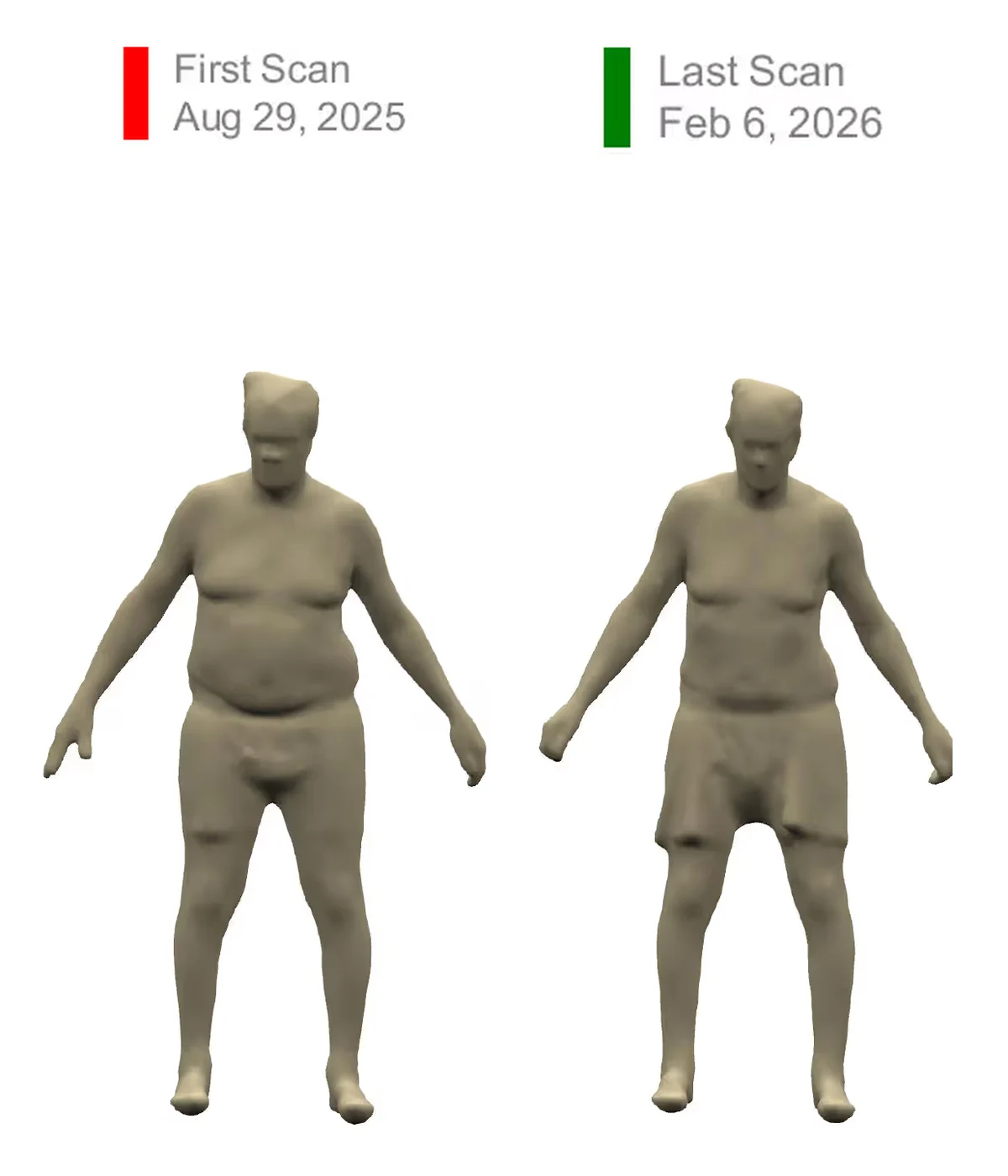
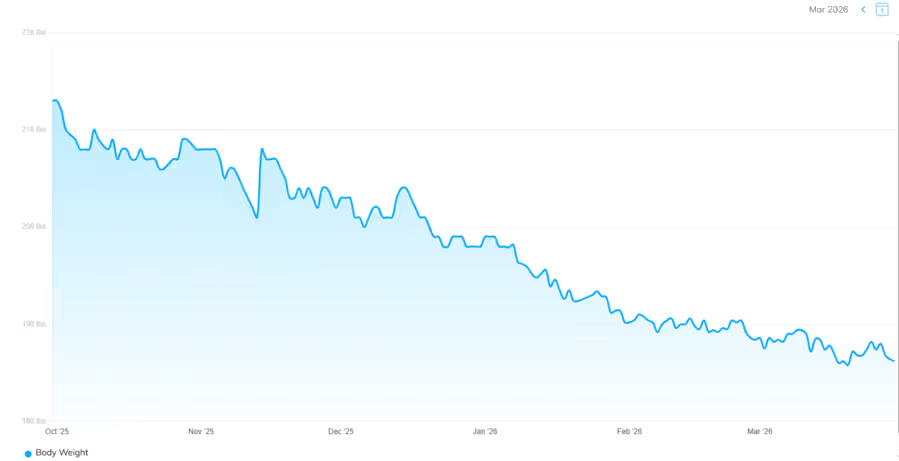
225 → 187 lbs · Body fat 33% → 30% · Chronic Achilles pain gone
If this is you: Retired, late 60s. Never trained a day in your life. Something's been replaced or repaired, something else aches, and you've been told to "take it easy" so many times you've started to believe it.
John is retired and in his late 60s. He ran his own delivery business for decades, up before dawn seven days a week, and he still wakes at 3 or 4 in the morning out of habit. Married, with kids. Pickleball, gardening, hockey on TV, walking the dog.
Man of few words. He sat down with Joe, said he had a new hip, wanted to lose weight, and had never done any of this before. That was the whole consultation.
The other thing he wanted gone was a nagging Achilles. He plays a lot of pickleball, more than his body was asking for, and the tendon had been sore for a long time.
Food was chips and processed snacks, no portion control. He knew what was good and what wasn't. Nobody had ever given him a reason to care.
The assessment showed a body that had never been asked to move on purpose. He couldn't squat past a few inches. He couldn't hinge. There were no movement patterns to build on, so Joe would be building them from zero, and carefully, around a new hip.
But the limiter wasn't the hip and it wasn't the Achilles. It was that John had never once thought about what he was eating. Joe's bet was that a man this compliant would lose weight the moment he started paying attention. He didn't need a diet. He needed to notice.
Hand portions. John didn't want to track anything, so Joe didn't ask him to. Three meals a day, use your hand to size each one, that's it.
He was strict with it from the first week. Then he did something Joe hadn't asked for yet: he swapped the chips and processed snacks for whole food on his own. "He kind of just started to switch it up." The weight started coming off right away, before any tracking, before any calorie number existed.
In the gym, Joe went straight at the Achilles with calf raises, starting with holds and building up. John had probably never done a calf raise in his life. As his calves got stronger, the pain went away.
There wasn't much of one, and that's the story. No drama, no tough conversations. A few weekend bumps on the chart, then straight back down.
Two things took some pushing. Around the second or third scan the weight loss slowed, and Joe told him it was time to start tracking. John didn't want to. Joe pushed anyway, because he'd watched how John handled portions and knew he'd handle this too. The first couple of weeks were a learning curve, weighing food and logging it right. Then it stuck. Now he does it without being reminded, and Joe says he came to enjoy it.
The other was pickleball. John kept playing more than his body wanted, and Joe had to keep the gym and the court from fighting each other.
Early on, Joe drew out the whole plan: eat more first to build his calories up, then cut. A lot of people stall at the "eat more" part. John looked at the roadmap, understood it, and never questioned it again. When the cut came, the weight fell off.
And one day Joe asked how the Achilles was. "Yeah, it's gone." That was the whole conversation.
His words to Joe on the last session: "It's been a pleasure. If there's anybody I know, I'd definitely recommend you."
Joe: "Straight business. Quiet guy. Man of few words. But hard worker."
You don't need to be a gym person, and you don't need to want a chatty relationship with your coach. You need someone to look at how you actually move and eat, find the one thing holding you back, and start there. For John that was portions and a calf raise. Whatever it is for you, the free week is where we find out.

5.0
408