
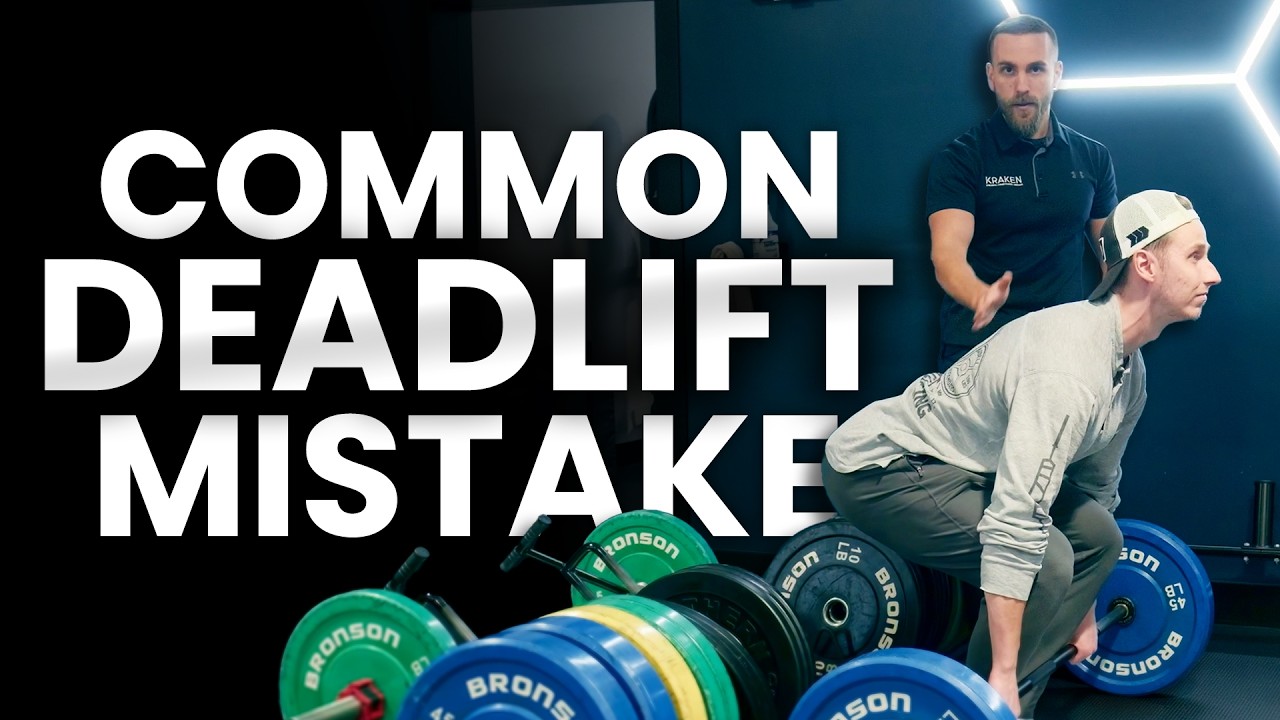
The deadlift mistake most people don’t know about is over-extending the spine — arching the back too far in the opposite direction of rounding. It looks straight on camera and feels correct, but the lower back is actually hyperextended. The real goal is a neutral spine from top to bottom, which means the tailbone stays tucked, the chin stays tucked, and the rib cage lifts just enough to flatten the upper back without over-arching.
Watch: Deadlift Form Mistake Fix
In this tutorial, Josko and Brandon from Kraken Fitness demonstrate the deadlift mistake most people don’t realize they’re making — over-extending the spine — and show exactly how to find a true neutral position from top to bottom.
The Hidden Mistake: Over-Extension
Everyone knows you shouldn’t round your back during a deadlift. That’s day-one advice at every gym. But there’s a second mistake that’s just as common and almost nobody talks about: over-extension.
Over-extension means arching the lower back in the opposite direction of rounding. When someone sets up for a deadlift, grabs the barbell, and tries to keep their back “straight,” they often end up hyperextending. The lower back curves inward, the butt pushes out, and the spine looks flat from the side — but it’s actually loaded in a compromised position.
This is the mistake that flies under the radar because it looks correct. On camera, from across the gym, it appears like a straight back. But the spine is concave, curving the wrong way. The lower back is bearing load in extension, which creates compression on the vertebrae and disc pressure that builds over time.
Most people are told “don’t round your back” and interpret that as “arch your back as much as possible.” They overcorrect. They pull their chest up aggressively, push the hips back, and crank the lower spine into extension. And because nobody tells them this is also a problem, they do it for months or years until the lower back starts hurting.
Kraken’s trainers in Burnaby see this constantly with new clients who have deadlift experience. They’ve been lifting for a while, they know the basics, but their lower back is silently taking load it shouldn’t be because they’re extending instead of staying neutral.
The fix starts with one cue: tuck the tailbone. This reverses the over-extension and brings the pelvis into a position where the lower back can actually be straight, not arched.
Lower Back vs Upper Back Rounding
Here’s where the deadlift gets nuanced. Not all rounding is created equal, and understanding the difference between lower back rounding and upper back rounding changes how you think about the lift.
When you tuck your tailbone and tuck your chin — both necessary to correct over-extension — the upper back will round slightly. This looks wrong to most people. They see the upper back curve forward and think the form has broken down. But what matters more is what’s happening at the lower back.
With the tailbone tucked and the chin tucked, the lower back is straight. That’s the priority. A straight lower back with a slightly rounded upper back is safer and more structurally sound than a flat upper back with an over-extended lower back. The lower spine is where disc injuries happen. The upper back can tolerate moderate rounding without the same risk.
This is the part that confuses people who’ve been told “keep your back flat.” A completely flat back from shoulders to tailbone requires a degree of mobility and extension that many people don’t have — and forcing it usually means the lower back compensates by arching.
Josko and Brandon’s approach at Kraken Fitness prioritizes the lower back over the upper back. If a client tucks their tailbone and gets a perfectly flat lower spine but the upper back rounds a little, that’s a better deadlift position than someone who looks “straight” but is actually hyperextended through the lumbar spine.
The key distinction: lower back rounding is dangerous. Upper back rounding is tolerable. Over-extension of the lower back is just as dangerous as rounding it, but almost nobody recognizes it as a problem.
How to Find True Neutral Spine
The ideal deadlift position isn’t over-extended, isn’t rounded, and isn’t forcing one part of the back straight at the expense of another. It’s neutral from top to bottom. Here’s how Kraken’s trainers coach clients into that position.
Start at the bottom. Grab the barbell and set your feet. Before you pull, tuck your tailbone underneath you. This corrects any over-extension in the lower back and flattens the lumbar spine. If you’ve been over-extending, this will feel like you’re rounding — but you’re not. You’re finding neutral for the first time.
Next, tuck the chin slightly. Not aggressively jammed into the chest, just enough that the cervical spine isn’t cranked into extension. Looking at the floor about six feet in front of you usually puts the neck in the right spot.
Now here’s the final piece that brings it all together: lift the rib cage up slightly. Not aggressively — just enough to straighten the upper back without re-creating the over-extension you just fixed in the lower back. Think about showing the logo on your shirt to the wall in front of you. This cue opens the upper back just enough.
The result is a spine that’s neutral from the base of the skull to the tailbone. The lower back is flat, not arched. The upper back is relatively straight, not rounded. The chin is tucked, not cranked up.
This is the position Kraken’s coaches teach every new client in Burnaby before adding any meaningful weight to the deadlift. It feels different from what most people are used to because most people have been over-extending without knowing it. But once you feel a truly neutral deadlift, the lower back pressure disappears and the hamstrings and glutes take over the lift the way they’re supposed to.
The balance is subtle. Too much tailbone tuck with no rib lift creates upper back rounding. Too much rib lift with no tailbone tuck recreates over-extension. The sweet spot is both cues working together — tailbone tucked, rib cage lifted just enough, chin neutral.
FAQ
Is some upper back rounding okay during deadlifts?
Some upper back rounding is acceptable and often safer than forcing a perfectly flat back. The priority is keeping the lower back neutral and straight. A slight upper back curve with a flat lower back is a better position than a flat upper back with an over-extended lower back.
How do I know if I’m over-extending during deadlifts?
Film yourself from the side. If your lower back curves inward and your butt pushes out in the setup position, you’re over-extending. The lower back should look flat, not arched. The tailbone tuck test — actively tucking your tailbone under — shows you where neutral actually is.
Why does my lower back hurt after deadlifts if my form looks good?
Looking good and being neutral are different things. Over-extension looks correct from most angles but loads the lumbar spine in a compromised position. If your lower back hurts after deadlifts despite “good form,” try tucking your tailbone and see if the pain changes.
Should I look up or down during deadlifts?
Keep your chin slightly tucked and look at the floor about six feet in front of you. Looking up cranks the cervical spine into extension, which often triggers over-extension down the rest of the spine. A neutral neck helps maintain a neutral lower back.
What’s the difference between over-extension and neutral spine?
Neutral spine means the lower back is flat — not arched inward, not rounded outward. Over-extension means the lower back is arched inward, creating a concave curve. Both rounding and over-extension are deviations from neutral, and both can cause lower back issues over time.
Ready to Fix Your Deadlift?
Kraken Fitness is a personal training gym in North Burnaby near Brentwood. If you want a coach to film your deadlift from the side, identify whether you’re over-extending, and dial in your neutral spine, try a free week — no commitment, no pressure.
Related Posts
- Glute Bridge Form Fix: 2 Mistakes to Correct — why you can’t feel it in your glutes
- Shoulder Press Pain Fix: Test and Correct Your Form — wall test and incline workaround
- 5 Reasons You’re Not Seeing Results at the Gym — common mistakes that stall progress
- Why Kraken Fitness Trains Barefoot — the science behind barefoot training
- The Bare Minimum Workout for Busy Parents — minimum effective dose training