
Shoulder press pain usually comes from poor mobility or flawed mechanics, not the exercise itself. A simple wall test reveals whether you have the overhead range of motion to press safely. If you fail the test, an incline press workaround trains the same muscles without the pain. If you pass, two form corrections — wrist-over-elbow stacking and rib cage control — fix the most common causes of shoulder strain.
Watch: Shoulder Press Pain Fix
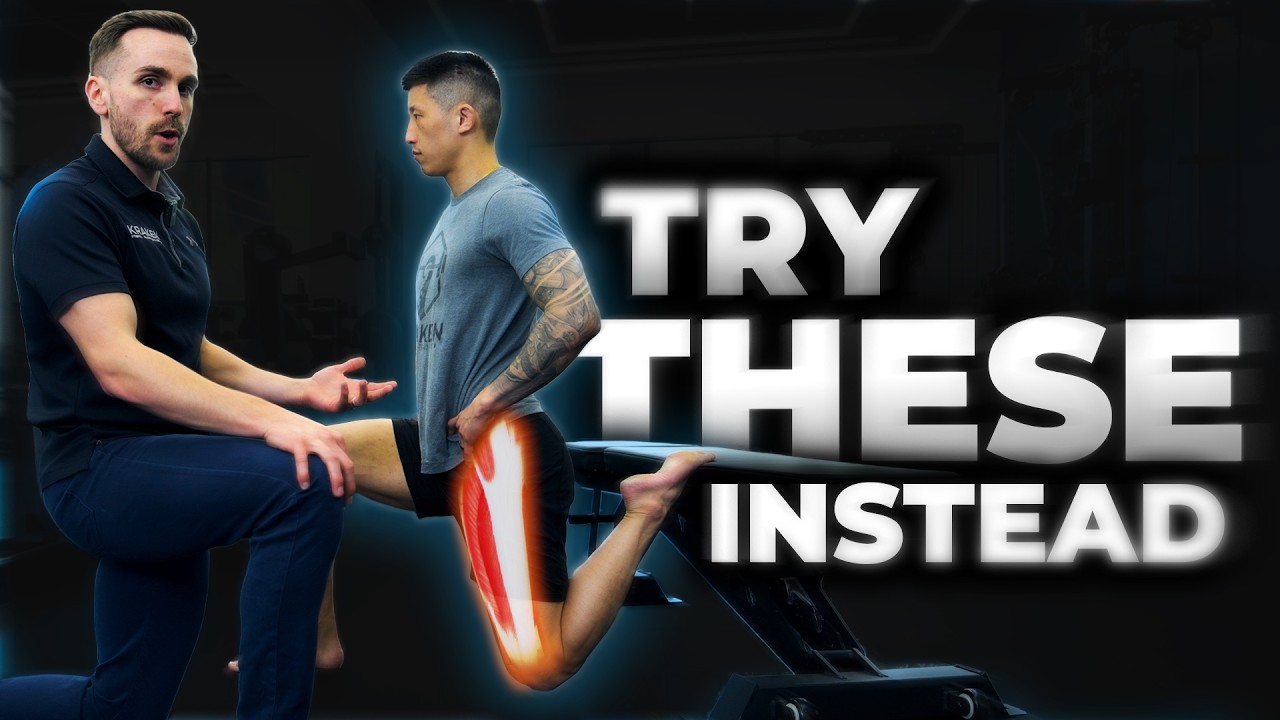
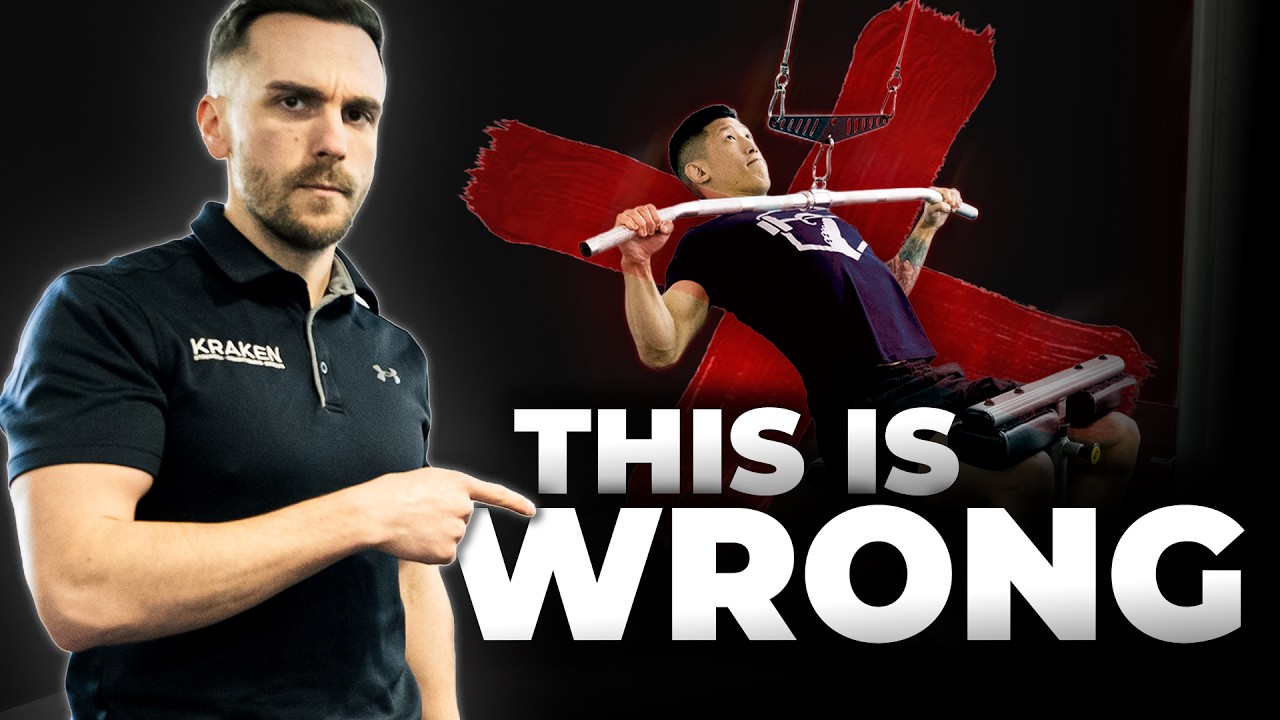
In this tutorial, Josko and Brandon from Kraken Fitness walk through a mobility test, a safe workaround for limited range of motion, and two form corrections that eliminate the most common causes of shoulder press pain.
The Wall Test: Should You Even Be Pressing Overhead?
Before fixing your shoulder press form, you need to find out whether your body is ready to press overhead at all. A quick wall test gives you the answer in about 10 seconds.
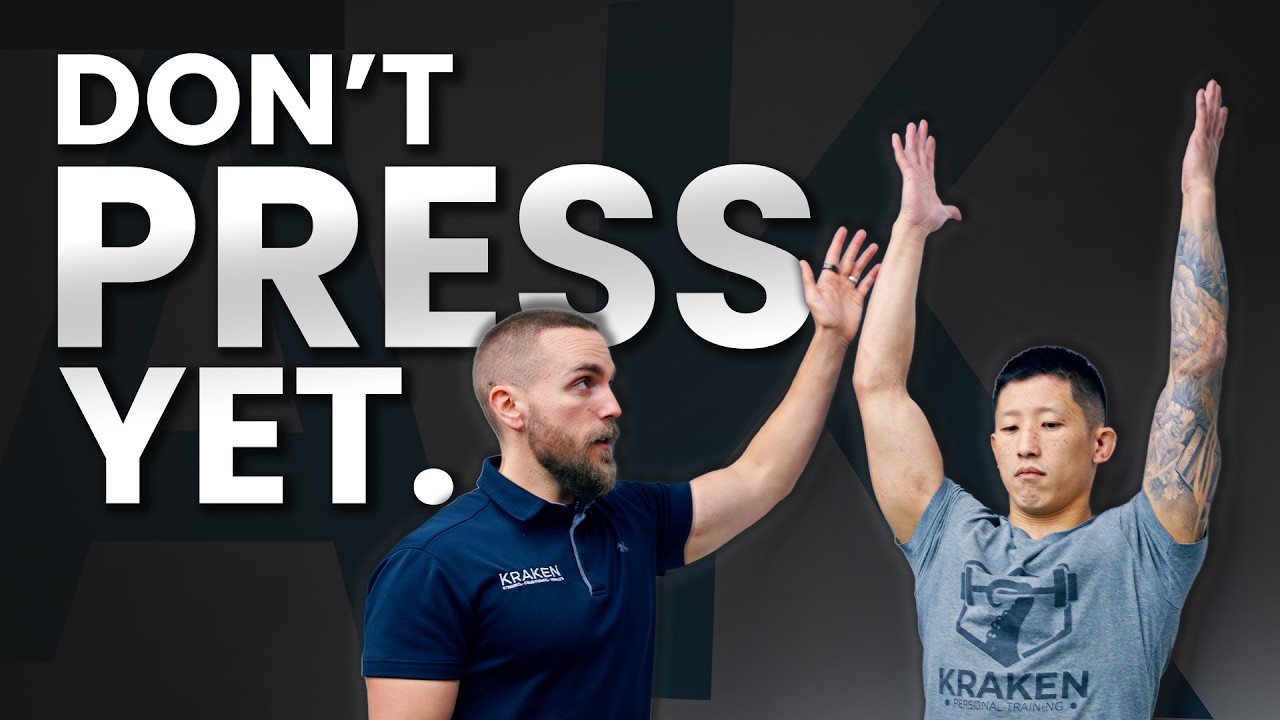
Stand roughly a foot away from a wall. Fall back so your upper back is against the wall and sit slightly into your knees. Tuck your tailbone and drive your lower back flat against the wall — no gap between your spine and the wall. Your head should also be touching the wall. From this position, keep your arms straight and reach up to try to touch the wall overhead.
If your thumbs can touch the wall, you have enough overhead mobility to shoulder press safely.
Here’s where most people run into trouble. When they drive their lower back into the wall, their upper body posture is so rounded that they can’t even get their head to touch the wall. And when they raise their arms, they only get partway up. The arms stop well short of the wall because the lats and shoulders are too tight to allow full overhead range of motion.
Even a minor failure — where the head almost touches the wall but doesn’t quite get there — means overhead pressing is going to cause problems. The shoulder joint doesn’t have the range of motion it needs, and forcing a shoulder press through that restriction is what creates pain and eventually injury.
The fix: stretch the lats daily. Tight lats are the primary culprit behind limited overhead mobility. As that tightness releases over weeks and months, re-test against the wall. When your thumbs touch with your lower back flat, you’re cleared to press overhead.
Kraken’s trainers in Burnaby use this wall test with every new client before programming any overhead pressing. It takes 10 seconds and prevents months of unnecessary shoulder pain.
The Incline Press Workaround
Failing the wall test does not mean you can’t train your shoulders. It just means you need a different angle.
Set a bench to an incline — even a high incline works. Pressing at an incline still trains the shoulder muscles in a similar way to an overhead press, but the angle is forgiving enough that limited overhead mobility doesn’t become a problem. The shoulder joint stays in a range it can handle safely.
As you stretch your lats and improve your overhead mobility over time, gradually bring the bench more vertical. Move it from a 45-degree incline to 60 degrees, then 70, then eventually fully upright. Each step closes the gap between an incline press and a true shoulder press.
This progressive approach means you never stop training your shoulders while you work on the mobility limitation. By the time you pass the wall test, you’ve been building shoulder strength the entire time. The transition to overhead pressing feels natural because the muscles are already strong — they just needed the range of motion to catch up.
Brandon recommends this workaround to every client at Kraken Fitness who fails the wall test. It’s not a lesser exercise. It’s the right exercise for where your body is right now. Training through pain to hit a vertical press is never the answer.
Wrist Over Elbow: The Stacking Fix
For people who pass the wall test and are ready to shoulder press, the single most important form cue is keeping the wrist stacked directly over the elbow throughout the entire movement.
When the wrist stays vertically aligned above the elbow — from the bottom of the press all the way to the top — the shoulder joint is automatically protected. The load travels straight through the bones instead of creating shear forces on the shoulder capsule. This one alignment cue fixes most shoulder press pain without any other changes.
The common fault goes in one direction: the wrist falls forward in front of the elbow. Even a small forward drift changes the angle of force on the shoulder joint and creates impingement. That’s the pinching sensation people feel in the front or top of the shoulder during pressing.
Some people overcorrect and let the wrist drift too far behind the elbow. That’s less common but still problematic — it creates a different kind of strain on the shoulder.
The cue is simple: watch from the side. At every point in the movement, the wrist should be directly above the elbow. Not in front. Not behind. Stacked. This applies whether you’re using dumbbells, a barbell, or kettlebells.
Kraken’s coaches often stand to the side of clients during shoulder press sets specifically to watch this alignment. It’s the first thing they correct because it solves the majority of pain complaints on its own.
Stop Arching Your Back on Shoulder Press
The second major form flaw is excessive back arching during the press. When people lean back and arch, the shoulder press turns into a half-press, half-incline-chest-press hybrid that doesn’t train the shoulders well and strains them in the process.
Arching happens because the weight is too heavy, the overhead mobility is limited, or both. The body compensates by tilting backward to make the angle easier. But that compensation loads the anterior deltoids and the pec minor instead of the medial deltoids, which defeats the purpose of the exercise. It also puts the shoulder joint in an extended, compromised position.
The fix: keep the rib cage down and brace the core. Think about pulling the front of the ribcage toward the pelvis — the same bracing you would use for a plank. This prevents the back from extending and keeps the shoulders in a safe, stacked position.
From that braced position, keep the elbows slightly forward — not flared way out to the side and not pinned against the body. Combined with the wrist-over-elbow stacking, this puts the shoulder joint in its strongest and safest pressing position.
If you can’t press the weight without arching your back, the weight is too heavy. Drop it down and press with a flat, braced torso. The shoulder development will be better, and the pain will disappear.
At Kraken Fitness in North Burnaby, trainers start every new client’s shoulder press with this sequence: wall test first, then stacking cue, then rib cage control. The combination addresses virtually every cause of shoulder press pain that isn’t a structural injury.
FAQ
How do I know if I should stop doing shoulder press?
Use the wall test described above. Stand against a wall with your lower back flat and try to touch the wall overhead with straight arms. If your thumbs can’t reach the wall, switch to incline pressing and stretch your lats daily until your mobility improves.
What muscles should I feel working during shoulder press?
You should feel the medial (side) deltoids doing most of the work, with some involvement from the front deltoids and triceps. If you mainly feel strain in the front of the shoulder or your lower back, your form needs correction — likely the wrist-over-elbow stacking or the back arch.
Can tight lats really cause shoulder press pain?
Tight lats are one of the most common causes of overhead pressing pain. The lats attach to the upper arm and restrict overhead range of motion when they’re short. Daily lat stretching improves overhead mobility over weeks, and the wall test tracks your progress objectively.
Is incline press as effective as shoulder press for building shoulders?
A high incline press trains the shoulders effectively, especially when overhead mobility is limited. Kraken’s trainers use it as the primary pressing movement for clients who fail the wall test. As mobility improves, the bench angle increases until the client can press fully overhead.
Should my elbows flare out during shoulder press?
Elbows should be slightly forward of the body, not flared wide to the sides. Wide elbow flare creates impingement in the shoulder joint. Keeping the elbows slightly forward with the wrist stacked over the elbow protects the shoulder and produces better muscle activation.
Ready to Fix Your Press?
Kraken Fitness is a personal training gym in North Burnaby near Brentwood. If you want a coach to test your mobility, correct your form, and program around your limitations instead of through them, try a free week — no commitment, no pressure.
Related Posts
- Glute Bridge Form Fix: 2 Mistakes to Correct — why you can’t feel it in your glutes
- 5 Reasons You’re Not Seeing Results at the Gym — common mistakes that stall progress
- Why Kraken Fitness Trains Barefoot — the science behind barefoot training
- How to Actually Enjoy Working Out — making fitness sustainable
{ "@context": "https://schema.org", "@type": "BlogPosting", "headline": "Shoulder Press Pain Fix: Test and Correct Your Form | Burnaby", "description": "Shoulder press causing pain? Kraken Fitness in Burnaby shows a simple wall test for mobility, the incline workaround, and form fixes that eliminate shoulder strain.", "image": "[FEATURED IMAGE URL]", "datePublished": "2026-03-03", "dateModified": "2026-03-03", "author": [ { "@type": "Person", "name": "Josko Kraken", "jobTitle": "Founder & CEO", "url": "https://krakentraining.com" }, { "@type": "Person", "name": "Brandon Ngai", "jobTitle": "Co-Owner & COO", "url": "https://krakentraining.com" } ], "publisher": { "@type": "Organization", "name": "Kraken Fitness", "logo": { "@type": "ImageObject", "url": "[LOGO URL]" } }, "mainEntityOfPage": { "@type": "WebPage", "@id": "https://krakentraining.com/shoulder-press-pain-fix-burnaby/" }}{ "@context": "https://schema.org", "@type": "FAQPage", "mainEntity": [ { "@type": "Question", "name": "How do I know if I should stop doing shoulder press?", "acceptedAnswer": { "@type": "Answer", "text": "Use the wall test described above. Stand against a wall with your lower back flat and try to touch the wall overhead with straight arms. If your thumbs can't reach the wall, switch to incline pressing and stretch your lats daily until your mobility improves." } }, { "@type": "Question", "name": "What muscles should I feel working during shoulder press?", "acceptedAnswer": { "@type": "Answer", "text": "You should feel the medial (side) deltoids doing most of the work, with some involvement from the front deltoids and triceps. If you mainly feel strain in the front of the shoulder or your lower back, your form needs correction -- likely the wrist-over-elbow stacking or the back arch." } }, { "@type": "Question", "name": "Can tight lats really cause shoulder press pain?", "acceptedAnswer": { "@type": "Answer", "text": "Tight lats are one of the most common causes of overhead pressing pain. The lats attach to the upper arm and restrict overhead range of motion when they're short. Daily lat stretching improves overhead mobility over weeks, and the wall test tracks your progress objectively." } }, { "@type": "Question", "name": "Is incline press as effective as shoulder press for building shoulders?", "acceptedAnswer": { "@type": "Answer", "text": "A high incline press trains the shoulders effectively, especially when overhead mobility is limited. Kraken's trainers use it as the primary pressing movement for clients who fail the wall test. As mobility improves, the bench angle increases until the client can press fully overhead." } }, { "@type": "Question", "name": "Should my elbows flare out during shoulder press?", "acceptedAnswer": { "@type": "Answer", "text": "Elbows should be slightly forward of the body, not flared wide to the sides. Wide elbow flare creates impingement in the shoulder joint. Keeping the elbows slightly forward with the wrist stacked over the elbow protects the shoulder and produces better muscle activation." } } ]}{ "@context": "https://schema.org", "@type": "VideoObject", "name": "Shoulder Press Pain Fix: Test and Correct Your Form | Kraken Fitness", "description": "In this tutorial, Josko and Brandon from Kraken Fitness walk through a mobility test, a safe workaround for limited range of motion, and two form corrections that eliminate the most common causes of shoulder press pain.", "thumbnailUrl": "[THUMBNAIL URL]", "uploadDate": "2026-03-03", "contentUrl": "[YOUTUBE URL]", "embedUrl": "[YOUTUBE EMBED URL]", "publisher": { "@type": "Organization", "name": "Kraken Fitness", "logo": { "@type": "ImageObject", "url": "[LOGO URL]" } }}