
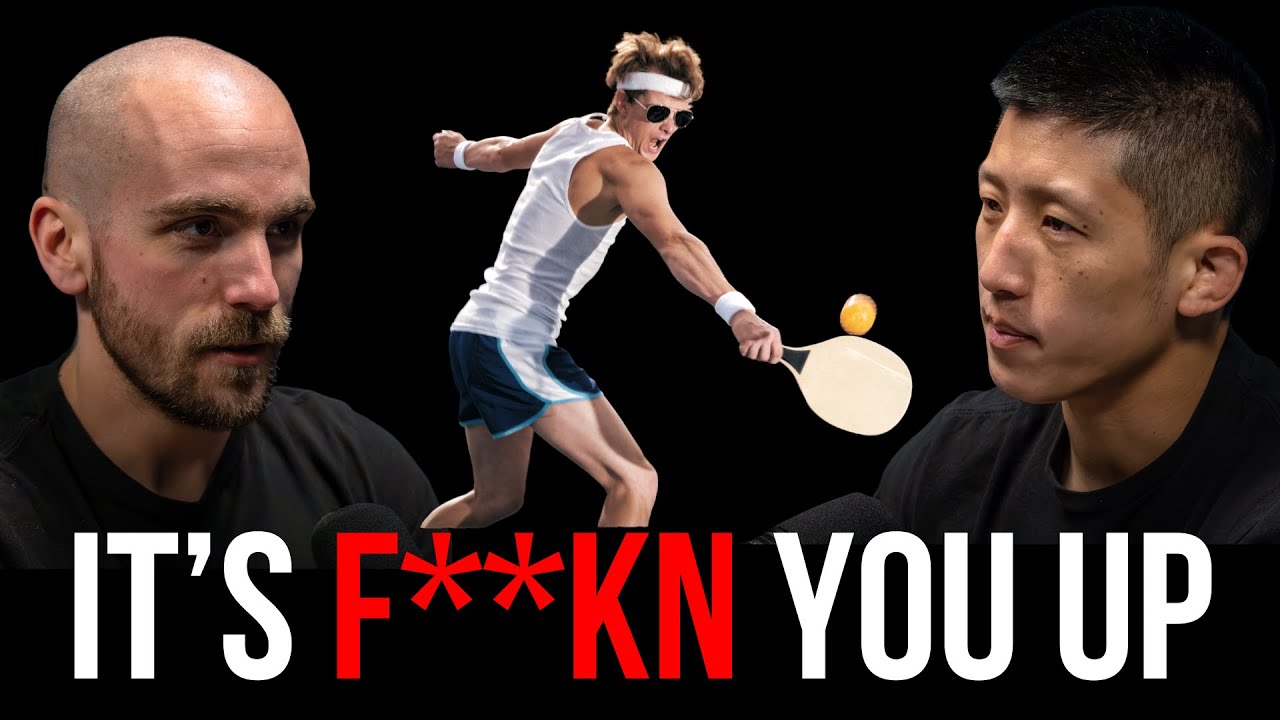
Pickleball is the fastest-growing sport in the country, and it’s also becoming the biggest source of injuries walking into physio clinics. At Kraken Fitness in North Burnaby, near Brentwood, coaches work with pickleball players who went from sitting at a desk eight hours a day to playing pickleball eight hours a day — and their bodies can’t handle the jump. The fix isn’t to stop playing. It’s to build the strength foundation that lets you play without breaking down.
Watch: Pickleball Bodies
In this episode of the Kraken Power Podcast, Josko and Brandon talk about why pickleball is creating more injuries than any other recreational sport and what strength training can do about it.
Why Pickleball Is Destroying People’s Bodies
Pickleball has a low barrier to entry, it’s incredibly fun, it’s social, and you can be competitive with other 50-year-olds. That’s exactly why it’s dangerous. People go from doing almost nothing to playing four, five, six hours straight without any ramp-up period.
Brandon’s dad is the perfect example. After retiring, he traded eight hours at a desk for eight hours on the pickleball court. That was fine for about a year. Then every weekend became a complaint session: “Brandon, what should I do about my forearm? My knee hurts. My Achilles is killing me.”
The problem isn’t pickleball itself. It’s the volume, and the fact that untrained bodies can’t handle it. You wouldn’t go from zero running to marathon running overnight. But people regularly go from zero activity to drilling pickleball moves for four hours straight because the sport is so enjoyable they don’t notice the damage until it’s done.
A chiropractor at Strike — the physio and chiro clinic in the same building as Kraken Fitness in Burnaby — recently posted about where most of his injured patients are coming from. The answer: pickleball. More than running, more than CrossFit, more than rec league hockey.
Josko uses the inner Serena Williams comparison: “The best way to get someone’s inner Serena Williams out is to get a 50-year-old playing pickleball.” The competitive drive kicks in and all awareness of volume goes out the window.
The Most Common Pickleball Injuries
The injuries showing up from pickleball are predictable once you understand the movement patterns of the sport.
Elbows and forearms are the number one injury site. The repetitive forehand-backhand motion throughout hours of play wears out the smaller tendons in the forearm. Brandon calls it tendinopathy — the tendons get overloaded from repetitive stress without adequate recovery time. It’s the same injury pattern cashiers get from scanning grocery items all day.
Knees are the second most common. Players spend long periods in a half-squat position, bouncing up and down, with constant re-acceleration and deceleration to lunge at the ball. Without the quad and hamstring strength to absorb that load, the knees take the punishment.
Ankles and Achilles come next. Pickleball involves a lot of stop-start motion — lateral cuts, quick pivots, sudden lunges. The Achilles tendon and calf muscles aren’t conditioned for that kind of repeated stress in most recreational players.
The common thread: these aren’t acute injuries from a single bad moment. They’re overuse injuries from volume that the body isn’t prepared to handle. The tendons, ligaments, and muscles needed to support these movements haven’t been built up because these players went straight from sedentary to competitive without any strength foundation.
As Brandon explains it: when the muscles give in quickly from being untrained, all the load goes directly to the tendons and ligaments. That’s where the damage happens.
Build the Foundation Before the Sport
Kraken’s coaches don’t start pickleball players with sport-specific movements. They start with foundational strength — hex bar deadlifts, barbell squats, basic compound movements that build the base.
This surprises a lot of clients. They expect lunges, plyometrics, and exercises that mimic pickleball movements. And they’ll get to those eventually. But the first three to six months is about building muscle, strengthening tendons, and creating the capacity to handle those dynamic movements safely.
Brandon’s logic is straightforward: forward lunges, lateral lunges, and plyometric drills are great for pickleball athletes. But those exercises are more demanding on the joints than basic squats and deadlifts. If you can’t handle the foundational movement, adding the sport-specific version on top just creates more injury risk.
The progression at Kraken looks like this:
- Phase 1: Foundational strength — squats, hinges, presses, pulls. Build muscle mass and tendon resilience. Three to six months.
- Phase 2: Movement progressions — stationary lunges before walking lunges, lunge holds before dynamic stepping. Same movement archetype as pickleball, but at lower intensity.
- Phase 3: Sport-specific training — forward and lateral lunges, wall balls, plyometric ankle and calf work, exercises that replicate the stop-start demands of the court.
People want to skip to Phase 3. Kraken’s coaches don’t let them. The foundation is what prevents the injuries from coming back.
Load Management: The Real Fix
The overarching philosophy for pickleball athletes at Kraken is load management — understanding your total weekly workload across both pickleball and strength training.
Brandon breaks it into questions: How many days per week are you playing pickleball? How many of those are hard sessions vs. light sessions? How many strength training sessions are you adding? Are those hard or light?
The goal is to keep overall workload at a level where you feel about a 2 or 3 out of 10 in terms of soreness before your next session. If you’re consistently at a 7 or 8, you’ve done too much. You want to feel like you could repeat the activity the next day if you had to.
Josko adds the self-check: if your soreness level isn’t improving over time despite consistent training, you’re chronically doing too much. Your body isn’t recovering and you’re in a hole that more pickleball won’t fix.
The flip side is encouraging: as your strength base grows, your capacity increases. The four hours of pickleball that used to destroy your shoulders will eventually feel manageable because you’ve built the muscle and tendon capacity to absorb the load. The strength training doesn’t just prevent injuries — it allows you to play more, better, for longer.
Brandon’s Dad: The Pickleball Comeback Story
Brandon’s dad is proof that the system works. After years of ignoring Brandon’s suggestions to strength train, the injuries from pickleball forced his hand. Brandon finally put his foot down: “Monday and Wednesday, you’re showing up at the gym at 8:45. I got you a personal trainer.”
His dad spent six to eight months in a recovery block. He dropped from playing five to seven times per week (sometimes multiple sessions per day) to maybe once per week. He stopped competing entirely during this period. The focus was entirely on building foundational strength — forearm and tricep exercises for the elbow issues, squats and hinges for the knees, progressive loading to build tendon resilience.
Six to eight months later, his dad’s review: “That was the best thing I’ve ever done in my life.” He now swears by gym training, plays pickleball at his previous level, and has the strength foundation to handle the volume without his forearms, knees, and Achilles falling apart.
The takeaway: you don’t have to stop playing. You have to build the body that can handle playing. And that starts in the gym, not on the court.
FAQ
Why does pickleball cause so many injuries?
Pickleball injuries come from volume, not intensity. The sport is so fun and accessible that players go from sedentary to four-plus hours of play without any physical preparation. Untrained tendons, ligaments, and muscles can’t handle the repetitive forehand-backhand motions, half-squats, and lateral cuts that pickleball demands.
What strength exercises help prevent pickleball injuries?
Kraken’s coaches start with foundational strength: squats, deadlifts, presses, and pulls. For pickleball-specific injury prevention, forearm and grip exercises help elbows, while progressive lunges and calf raises build knee and Achilles resilience. The key is building a base before adding sport-specific movements.
How long does it take to build enough strength for pickleball?
Brandon’s dad took six to eight months in a structured strength program before returning to full pickleball volume. Most clients at Kraken Fitness in Burnaby see meaningful improvement in injury resilience within three to six months of consistent strength training two to three times per week.
Should I stop playing pickleball if I have elbow pain?
You don’t necessarily have to stop completely, but you should reduce volume and add strength training for the forearms and surrounding muscles. Kraken’s approach is to build tendon capacity through progressive loading so the elbow can eventually handle the repetitive stress of pickleball.
How much pickleball is too much per week?
It depends on your fitness base. If you’re feeling above a 5 out of 10 on soreness consistently, you’re doing too much. Brandon recommends tracking your weekly workload across both pickleball and gym sessions and keeping post-activity soreness at a 2-3 out of 10 before your next session.
Ready to Start?
If pickleball is beating up your body and you want to build the strength to play without pain, Kraken Fitness in North Burnaby near Brentwood offers a free trial week. Kraken’s trainers work with pickleball players at every level to build the foundation that keeps you on the court.