
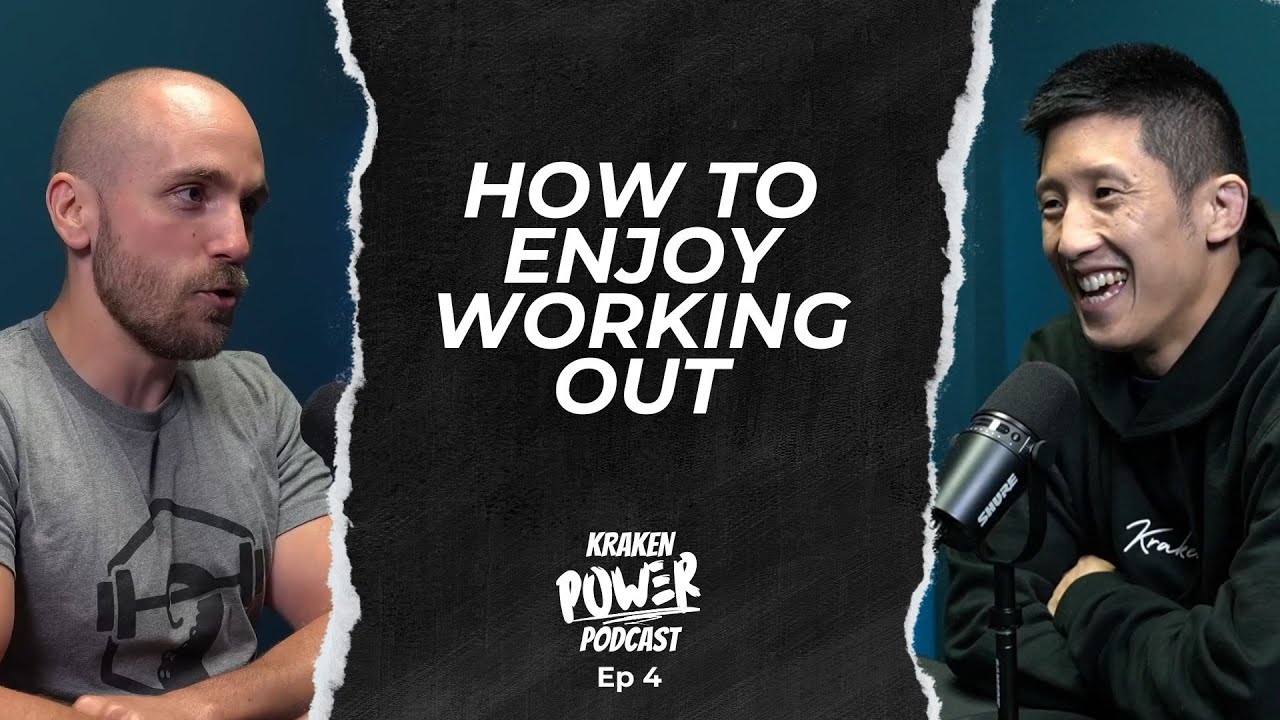
TL;DR: You don’t have to love the gym to get fit. Kraken’s coaches in Burnaby, BC help non-gym people find ways to actually enjoy exercise — by adding variety, gamifying progress, tracking wins, removing barriers, and staying flexible. The goal isn’t a perfect routine. It’s one you’ll actually keep doing.
Watch: How to Enjoy Working Out
In this episode of the Kraken Power Podcast, Josko and Brandon break down five practical strategies for making exercise something you actually look forward to — even if you’ve never enjoyed a workout in your life.
Why Most People Don’t Enjoy Exercise
The barrier isn’t laziness. It’s that most people have made working out way harder than it needs to be.
Kraken Fitness is a private coaching gym in North Burnaby, near Brentwood — and the people who walk through the door aren’t fitness enthusiasts. They’re everyday people who know they should be exercising but just can’t get themselves to do it consistently. As Brandon puts it during sales consultations, people will sit down and explain that they understand working out is good for them, they know changing their diet matters, but they’ve never really enjoyed it.
That’s the real problem. Not knowledge. Not access. Enjoyment.
The fitness industry makes it worse. Rigid training splits, complicated programs, intimidating gyms packed at 5 PM — all of it creates friction between a person and the simple act of moving their body. And when something isn’t enjoyable, consistency becomes a willpower exercise. That never lasts.
Here’s what Kraken’s coaches know from working with hundreds of non-gym people in Burnaby: if you enjoy your workouts, you’ll keep showing up. And if you keep showing up, the results take care of themselves. It really is that straightforward.
The rest of this post covers five ways to make that happen.
Add Variety to Your Workouts
Working out doesn’t mean you have to be in a gym five days a week doing the same exercises. That’s the fastest way to get bored and quit.
Kraken’s approach is practical. Come in for coached sessions two or three times a week for your strength training, then fill the gaps with whatever movement you actually enjoy. Go for walks. Play soccer. Swim. Do jiu-jitsu. The combination is what keeps things interesting.
Ross, one of Kraken’s trainers and a competitive bodybuilder, is a perfect example. He crushes heavy leg sessions at the gym — then goes to hot yoga. He also plays hockey. A guy who competes in bodybuilding still mixes it up because even he knows that doing the same thing every single day gets stale.
Kraken’s clients do the same thing. Some come in for weight training and do jiu-jitsu on the side. Others play hockey or soccer on their off days. The weight training might only be once or twice a week, and the other days are filled with activities they genuinely look forward to.
Brandon frames it well: training should spice your life up, not be something you dread. He’s always looked at strength training as a tool to get better at other things — soccer, daily life, whatever matters to that person. When you see the gym as a way to enhance the stuff you already care about, it stops feeling like a chore.
The key is that you don’t have to love every type of exercise. You just need enough variety that you’re never stuck doing only the thing you like least.
Gamify the Experience
Think about why people get sucked into video games for hours. It’s the progress. Leveling up, unlocking achievements, watching stats go up. You can do the exact same thing with fitness.
Can you jump a little higher this month? Lift a little more? Run a little faster? Maybe right now when you bend over you can only reach your knees — but if you keep at it, eventually you’ll touch your toes. Those small wins stack up and make the whole experience fun instead of something you’re just grinding through.
Brandon uses this with his clients all the time. One client came in for weight loss, so Brandon had him doing intervals on the rowing machine. Instead of just saying “row for 10 minutes,” he got the client tracking his wattage output and stroke count each round. The goal became beating his own numbers — more power, fewer strokes, better efficiency. Now that client actually prefers the rower over running, biking, or the assault bike. He gamified it.
Josko sees it with kettlebell training too. There’s a real skill component to kettlebells. You spend weeks getting the swing smooth, then you nail the clean to your shoulder, then you start working on the press. Each new movement you unlock feels like leveling up. It’s the same dopamine hit as getting that gold achievement on Xbox — except it’s happening in your actual life.
Track your workouts in an app or a simple notebook. Try to beat your previous numbers. Watch yourself improve over weeks and months. That progress is addictive in the best way.
Track Your Progress So You Can See It
This one is related to gamifying, but it’s different. Tracking isn’t just about beating numbers — it’s about being able to look back and see how far you’ve come. Without that, you’re shooting in the dark.
Josko uses his language learning as an example. His teacher makes him record himself speaking, and whenever he feels stuck, he goes back and watches old videos. The improvement is obvious in hindsight — but in the moment, day to day, it feels like nothing is changing.
Fitness works the same way. Kraken’s coaches see it with weight tracking all the time. A client steps on the scale every day and sees the same number for a week. Discouraging. But then they look back three weeks and they’re five pounds lighter. The daily view hides the trend.
Brandon puts it in practical terms: if you did 205 pounds on your squat last week and it felt like a 7 out of 10 effort, then you hit that same 205 this week and it felt like a 5 out of 10 — that’s real progress. The weight didn’t change, but you got stronger. You’d never know that without tracking.
Write things down. Use a notebook, a spreadsheet, a fitness app — whatever you’ll actually stick with. The format doesn’t matter. What matters is having a record you can review when things feel stagnant. Because they’re probably not. You just can’t see it without the data.
Make Your Workouts Convenient
If getting to the gym feels like a whole production, you’re going to skip it. That’s just how people work.
Josko is honest about his own advantage here. He owns a gym. He doesn’t have to change clothes, pack a bag, or drive anywhere. He can walk downstairs and start training. Most people don’t have that luxury. They have to get dressed, drive 20 or 30 minutes, find parking, and then start a workout. The session might be 45 minutes, but the total time commitment is closer to two hours once you factor in travel and getting ready.
That’s a real barrier. And it’s not just physical. The mental barriers matter just as much. Brandon talks about mental space — finding a time slot where you don’t have to worry about picking up kids, making dinner, or handling work emergencies. The best time to work out isn’t the “optimal” time according to some fitness article. It’s the time where your head is clear enough to actually be present.
A lot of Kraken’s clients have full home gyms but still come to the private facility in North Burnaby. Why? Because at home they end up on their phone between sets, workouts take twice as long, and they don’t see results. The convenience of having someone else design the workout and keep you focused for 45 minutes is worth the drive.
For people at regular gyms, the 5-to-7 PM rush is a huge barrier. Waiting in line for a lat pulldown machine kills motivation fast. Josko’s suggestion: work out on Saturday mornings (gyms are empty before 11 AM) and squeeze in a midweek session before work. Two workouts a week at times that actually work for your schedule beats five planned sessions you keep skipping.
Remove the barriers. Running shoes by the door. Clean workout clothes ready to go. A gym close to your house or office. A time slot that fits your life, not someone else’s idea of the best training window. The easier you make it, the more likely you’ll do it.
Keep Your Workouts Flexible
Rigid programs kill motivation. If your plan says “legs on Monday” and you wake up Monday dreading every second of it, you have two choices: force yourself through a miserable workout, or skip it and feel guilty. Neither one helps you enjoy exercise.
Kraken’s coaches take a different approach. If you don’t feel like hitting legs today, don’t hit legs. If you’d rather do split squats instead of back squats, do that. If you don’t feel like loading up heavy on bench press and want to use dumbbells instead, go for it. If you don’t feel like working out at all but you could go for a walk — just go for a walk.
Brandon challenges one of the biggest myths the fitness industry pushes on beginners: that you have to train like a bodybuilder. The idea that you need a chest day, a back day, a leg day with specific set and rep schemes — that’s designed for competitive bodybuilders. If your goal is to look a little better, feel a little healthier, and be able to play with your kids without getting winded, you absolutely do not need to train that way.
Even within strength training, there’s room for flexibility. Train heavy some days. Train light others. Move fast on certain exercises, slow on others. The program should match your goals, not someone else’s competition prep.
For 90-plus percent of people, the goal is straightforward: look a bit better, feel healthier, do things they couldn’t do before. That doesn’t require benching 225 or hitting a specific body part three times per week. It requires showing up consistently. And the more flexible you make the routine, the more consistently you’ll show up.
One caveat from the podcast: flexibility doesn’t mean avoiding hard things forever. If you “don’t feel like legs” for three months straight, that’s avoidance, not flexibility. But on any given day, giving yourself permission to adjust based on how you feel makes the long-term commitment sustainable.
FAQ
Do I have to go to a gym to get fit?
No. Gym training is one piece of a bigger picture. Kraken’s coaches recommend two or three coached sessions per week combined with activities you enjoy — walking, sports, yoga, swimming. The variety is what keeps you consistent long-term. The gym handles strength; you handle everything else.
How do I stay motivated when I’m not seeing results?
Track your progress. Kraken’s trainers see this constantly — clients feel stuck because they’re only looking at day-to-day numbers. When they review data from three or four weeks back, the improvement is obvious. A workout log, body measurements, or even recording yourself moving shows progress your memory won’t.
What if I get bored with my workout routine?
Change it. Flexibility is built into Kraken’s coaching philosophy. Swap exercises, try a new sport on your off days, gamify a movement you’ve been avoiding. Boredom usually means the program is too rigid, not that fitness isn’t for you.
Is it okay to just go for a walk instead of working out?
Absolutely. A walk is exercise. If you woke up tired and can’t face a full workout, going for a walk keeps the habit alive. Kraken’s coaches would rather you walk for 20 minutes than skip the day entirely and feel guilty about it. Movement is movement.
How often should I work out if I’m just starting?
Two to three times per week is plenty. Kraken’s coaching programs start most clients at twice a week with 45-minute sessions, then build from there based on how someone responds. Start with what you can stick to, not what sounds impressive.
Ready to Start?
If you’ve been putting off exercise because you’ve never found a way to enjoy it, Kraken’s coaches in Burnaby can help. The gym is built for people who don’t feel like gym people — private facility, individualized coaching, 45-minute sessions, and a free trial week to see if it fits. No pressure, no commitment.
Listen and Watch
Catch the full conversation on the Kraken Power Podcast — available on YouTube, Spotify, Apple Podcasts, and all major podcast platforms.
YouTube: https://youtu.be/zLrvOAu5tR8
Spotify: https://open.spotify.com/episode/2VYtBQXGNtCo3t3n9xTU4d?si=YTi87O_ERSiYiLpf2D3HpA
Apple Podcast: https://podcasts.apple.com/au/podcast/how-to-enjoy-working-out-ep-4/id1769000945?i=1000673330402