
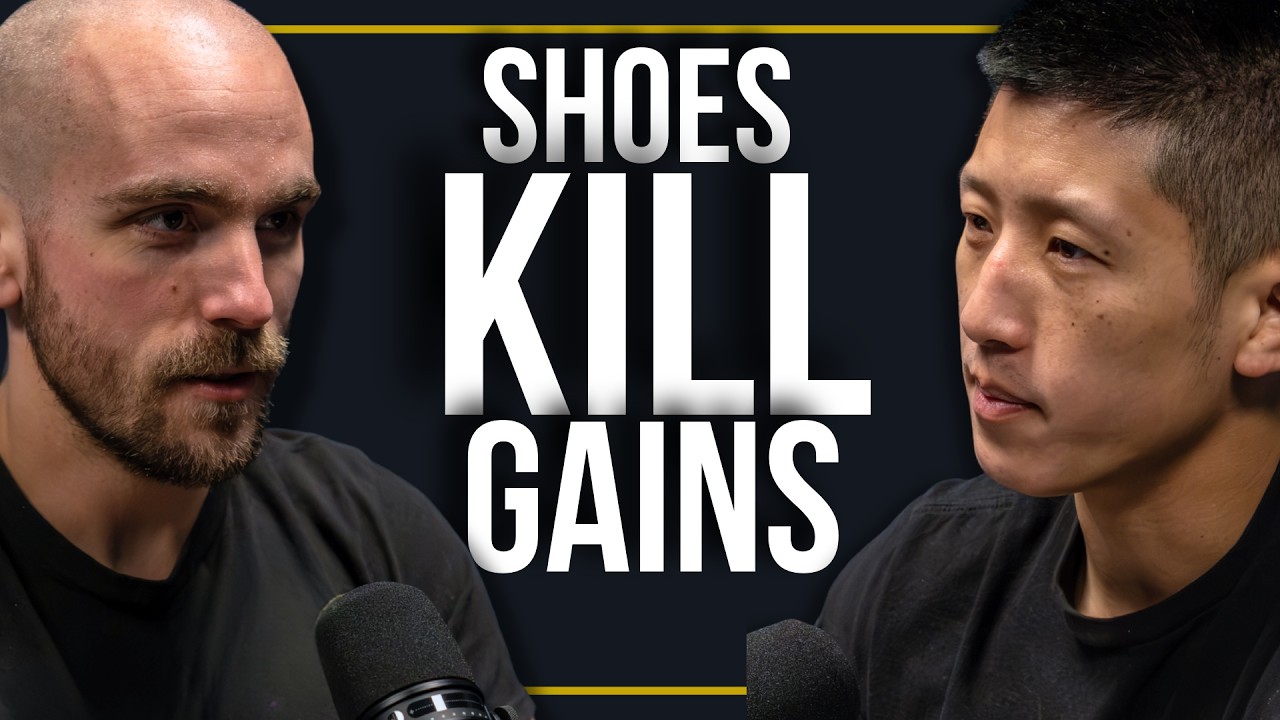
Your expensive gym shoes might be sabotaging your results. Kraken Fitness in North Burnaby, near Brentwood, is a barefoot training gym — every client trains in socks or bare feet. The reason: your feet have 200,000 nerve endings that go completely silent inside padded shoes. Training barefoot wakes them up, improves your balance, and fixes common issues like plantar fasciitis and knee pain.
Watch: Why Barefoot Training Works
In this episode of the Kraken Power Podcast, Josko and Brandon explain why Kraken is a barefoot gym, the science behind foot proprioception, and how to find good barefoot shoes without spending $200.
200,000 Nerve Endings Going Silent
The bottom of each foot contains roughly 200,000 nerve endings. These nerve endings send information back to your brain about where you are in space and how you’re connected to the ground. That feedback controls the positioning of your ankles, shins, knees, hips, and spine — your entire chain of movement.
When you put on padded shoes, those 200,000 nerve endings go quiet. Brandon compares it to putting on oven mitts and trying to do surgery. You lose the feedback that tells your body how to position itself properly.
This is why tightrope walkers work barefoot. It’s why ballet dancers wear minimal shoes. It’s why rock climbers who free solo barefoot a thousand feet up a mountain don’t have knee problems. Their feet are strong because they can feel the ground.
At Kraken Fitness in Burnaby, the coaching team sees this play out every day. Clients who train barefoot develop stronger feet, better balance, and improved movement quality. Clients who insist on wearing shoes — about 1% of Kraken’s membership — miss out on that feedback loop.
The toe splay test tells the story. Josko can spread his toes wide open, like opening a hand, because years of barefoot training have kept them mobile. Many new clients try to splay their toes and nothing moves. The toes are glued together from decades inside restrictive shoes.
Why Kraken Is a Barefoot Gym
Every client at Kraken Fitness trains barefoot. Most wear socks. Some go completely barefoot. When new clients show up saying they’ll bring indoor shoes, the coaching team redirects them: “That’s not the point. The point is to be barefoot.”
The hygiene concern comes up regularly, and Josko addresses it head-on. Kraken’s facility is meticulously clean — visibly cleaner than any big-box gym where you’d barely want to put your hands down for pushups. The floor is pristine. Everyone is in socks. Kraken provides grippy socks for clients who need them.
The comparison Josko makes: “Are you going to wear shoes when you go into your friend’s house?” The gym is that clean.
Many clients arrive at Kraken with existing knee pain, foot pain, or plantar fasciitis. The coaches have seen barefoot training help resolve these issues repeatedly. Brandon explains why: plantar fasciitis often develops because the fascia in the feet hasn’t been worked, stretched, or contracted regularly. It’s been locked inside a shoe. When the foot starts going through natural expansion, contraction, and toe extension during barefoot training, that fascia gets the movement it needs.
A telling diagnostic: most people can’t lift their big toe off the floor while keeping the other toes planted. That immobility in the big toe contributes directly to plantar fascia tightness, which travels up into the heel, the calf, and creates problems up the entire chain.
How Shoes Destroy Ankle Mobility
One of the biggest reasons people lack ankle mobility is the heel lift built into 99% of shoes. Brandon traces this back to Nike’s running shoe campaign — when they brought in Michael Jordan and started padding heels to absorb impact during jumps.
That extra heel padding solved one problem but created another. It artificially lifted the heel, shifted weight onto the forefoot, and over time, people lost the ability to access full range of motion in their ankles. It’s like wearing low-grade high heels 24/7.
This matters enormously for squatting. During a squat, the foot and hip go through multiple rotations — turning out at the top, going internal at 90 degrees, then external at the bottom, and reversing on the way up. A rubbery shoe sole blocks these natural rotations. The foot can’t move the way it needs to, which limits hip range of motion and compromises the entire squat pattern.
Josko experienced this firsthand. After years of barefoot training, he switched to cushioned running shoes for the Sun Run (a 10K in Vancouver) and immediately developed knee pain and shin splints — conditions he’d never dealt with in barefoot shoes. As soon as he went back to barefoot, the problems disappeared.
The shoe industry keeps changing what the “perfect” shoe looks like. Giant heel wedges in the ’80s, minimal shoes in 2010, giant foam clouds (Hokas) now. They haven’t figured it out because the answer was always the same: your feet work best with nothing on them.
Barefoot Shoes: What to Look For
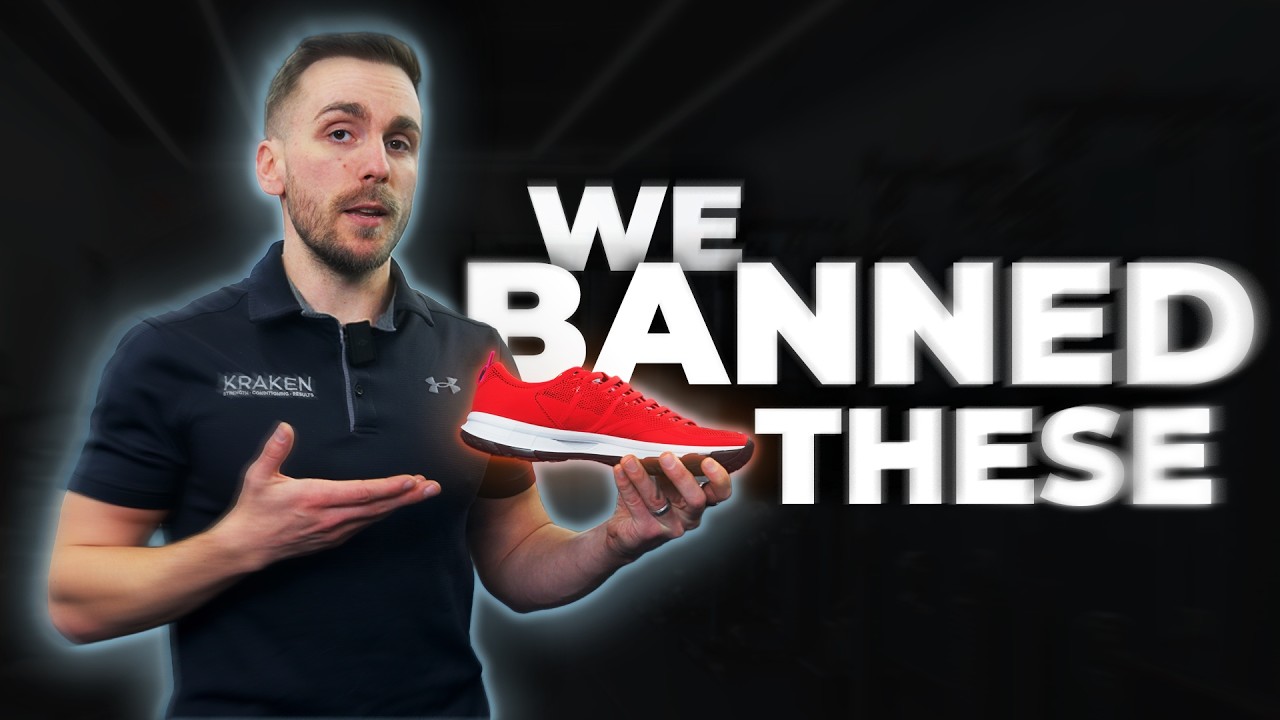
A good barefoot shoe should roll up into a ball. It should bend the other direction too. It should twist completely. If it can do all three, it’s a real barefoot shoe.
Josko’s current pair cost $58 on Amazon. They look like regular shoes but feel like walking barefoot. Compare that to Vivo Barefoot, which can easily run $200. The modern barefoot shoe market has gotten much better since the Vibram FiveFingers era — you no longer need to wear the webbed frog-feet shoes that make strangers ask about your footwear every two minutes.
Brandon started with Vibrams around 2010 during the Kelly Starrett mobility movement. He loved them for deadlifts and squats but got tired of people staring mid-set and then walking over to ask about the shoes. Josko took his Vibrams up the Grouse Grind and got stopped every few minutes.
The key specs for a barefoot shoe:
- Zero drop — no heel-to-toe height difference
- Flexible sole — can roll, bend, and twist in every direction
- Wide toe box — toes can splay naturally
- Minimal cushioning — you should feel the ground
- Looks normal — so you can wear them anywhere without the shoe conversation
For gym use, you can wear barefoot shoes at any facility. Even gyms that require shoes won’t question a pair that looks like regular sneakers but has no padding.
How to Transition to Barefoot Training
For strength training — squats, deadlifts, stationary exercises — Brandon says just switch right away. Your feet will get fatigued and feel like they’ve been worked, which is a good sign. There’s no real injury risk from going barefoot for exercises where you’re not covering distance.
For high-volume activities like running or long walks, transition gradually. The feet have been in cushioned shoes for years. Switching overnight from padded running shoes to barefoot for a 10K on concrete is asking for trouble.
Brandon’s recommendations for the transition:
- Start on softer surfaces. Run on trails instead of concrete while breaking in barefoot shoes — more absorption from the ground.
- Reduce volume first. If you run three times per week in regular shoes, cut to two, then one, then fully barefoot.
- Listen to the feet. Some calluses and soreness are normal early on. Pain is a signal to slow down.
That said, Josko went cold turkey — threw out his regular shoes and switched to barefoot for everything. His feet were sore at the beginning but adapted quickly. “It’s the natural way of being,” he says. So if you skip the gradual approach, you’re not going to injure yourself. It depends on how much volume you’re doing.
The one exception: marathon runners. Don’t go from cushioned shoes to barefoot marathons overnight. But for everyday training, walking, and general fitness? Just make the switch.
FAQ
Is it safe to train barefoot at the gym?
Dropping a weight on your foot will cause damage whether you’re wearing shoes or not. A regular gym shoe doesn’t protect against a 50-pound dumbbell. Kraken Fitness has trained clients barefoot for years without safety issues. The injury risk from shoes restricting natural movement is greater than the risk of going barefoot.
Can barefoot training fix plantar fasciitis?
Barefoot training can help resolve plantar fasciitis by restoring natural foot movement. The fascia in the feet needs regular stretching and contraction to stay healthy. When feet are locked in shoes, that fascia becomes immobile. Training barefoot allows natural expansion, contraction, and toe splay that addresses the root cause.
How much do good barefoot shoes cost?
Good barefoot shoes don’t have to be expensive. Josko trains in a $58 pair from Amazon that rolls up, bends both ways, and twists flat. Premium brands like Vivo Barefoot can cost $200 or more. The key features are zero drop, flexible sole, wide toe box, and minimal cushioning.
Why does Kraken Fitness require barefoot training?
Kraken Fitness in Burnaby requires barefoot training because it activates 200,000 nerve endings in each foot that go silent in regular shoes. This improves balance, squat mechanics, and movement quality. The gym maintains pristine cleanliness so clients can train in socks or bare feet comfortably.
Will my feet hurt when switching to barefoot shoes?
Some initial soreness and foot fatigue is normal when transitioning to barefoot shoes. For gym exercises like squats and deadlifts, most people adapt quickly. For running and high-volume walking, a gradual transition over a few weeks helps the feet adjust without issues.
Ready to Start?
Kraken Fitness is a barefoot training gym in North Burnaby near Brentwood. If you want to experience what proper barefoot training feels like with coaches who can guide your movement from the ground up, try a free week — no commitment, no pressure.