

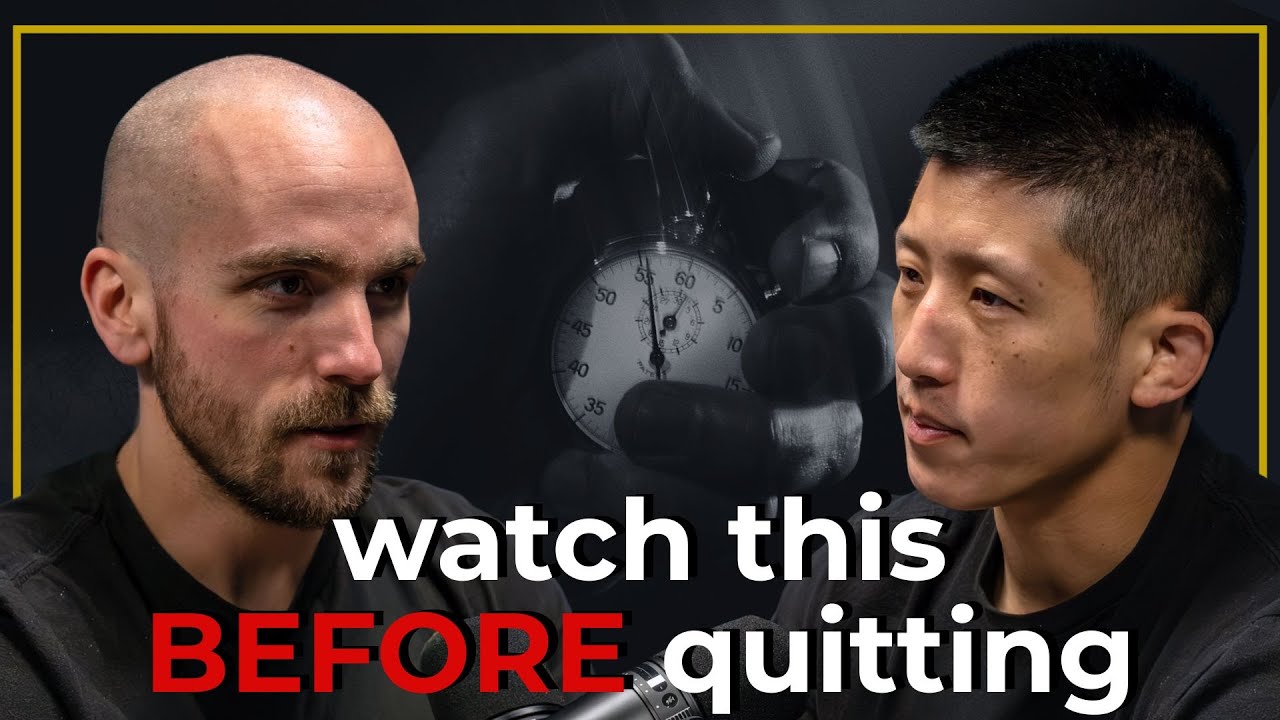
Slip-ups don’t ruin fitness progress — staying off track does. At Kraken Fitness in North Burnaby, near Brentwood, coaches use a 48-hour comeback formula that helps clients bounce back from any setback without shame spirals or extreme overcorrections. The strategy is simple: stop the self-labeling, get back on your original plan within 48 hours, and collect the win.
Listen: The 48-Hour Fitness Comeback Formula
In this episode of the Kraken Power Podcast, Josko and Brandon break down their 48-hour comeback formula — the exact strategy Kraken’s coaches use to help clients bounce back from slip-ups without spiraling into weeks of inactivity.
Why Perfect Consistency Doesn’t Exist
Perfect consistency is a myth. What actually separates people who transform their bodies from people stuck in an endless restart cycle is how quickly they course correct after a slip-up.
Brandon puts it bluntly: it’s not about never messing up. Everybody messes up. The difference is what happens in the 48 hours after the slip-up. People who let that window stretch into “I’ll start again Monday” or “I’ll get back on track in September” or “New Year, new me” are the ones who never make lasting progress.
At Kraken Fitness in Burnaby, the coaching team follows an 80/20 or 90/10 approach — Brandon personally runs closer to 90/10. That means roughly 90% of the time, behaviors are on point. The other 10% is real life happening. The goal isn’t to eliminate that 10%. It’s to make sure it doesn’t spiral into 50%.
The biggest mindset shift Kraken’s trainers teach new clients: slip-ups are data, not failures. When a client comes in after a rough weekend, the coaching response isn’t shame — it’s curiosity. “Thank you, now I know how to help you even more.”
The On-Off Mentality That Keeps You Stuck
The most damaging pattern in fitness isn’t eating too much on a Saturday night. It’s the binary thinking that follows — this idea that you’re either “on” your plan or “off” your plan with nothing in between.
Brandon sees this constantly at Kraken. Clients come in with an all-or-nothing mindset. They’re either dieting intensely or eating whatever they want. They’re either training five days a week or not at all. There’s no middle ground.
This binary approach guarantees failure because nobody can sustain the “on” mode indefinitely. The intensity is too high, the restrictions are too tight, and eventually something breaks — a birthday, a stressful week, a holiday. Then the switch flips to “off” and all progress disappears.
What makes this pattern so destructive is the self-labeling. People start saying things like “I’m the person who always falls off when it gets hard” or “I always reach for snacks when I’m hungry.” Those labels become self-fulfilling prophecies. At Kraken, the coaching team works with clients to stop the labeling and start treating each moment as something they’re working on — not something that defines them.
The 48-Hour Comeback Strategy
The 48-hour comeback strategy is Kraken’s practical tool for any slip-up. Here’s how it works, step by step.
Step 1: Stop the shame cycle. The moment you mess up, the worst thing you can do is spiral into “why did I do that?” self-talk. It happened. Move on. Don’t label yourself. Don’t attach your identity to the slip-up.
Step 2: Understand it’s normal. Especially when you’re starting something new, there will be more slip-ups at the beginning. Josko compares it to learning to be a mechanic — you’re going to drop your wrench, lose parts in the engine, and make mistakes. Those early mistakes are baby steps, not proof that you can’t do it.
Step 3: Get back on your original plan within 48 hours. Not a harder plan. Not a punishment plan. Your original plan. The same thing you were going to do the next day anyway. That’s it.
Step 4: Collect the win. As soon as you’re back on your plan, you feel the gratification of being on track again. That small win snowballs into momentum, which puts you right back where you were heading in the first place.
This isn’t a comeback strategy for someone who’s been off track for months. This is a tool for the immediate aftermath — the 48 to 72 hour window where you either bounce back or start a slide that could last weeks or months.
Why Overcorrecting Makes It Worse
One of the most common mistakes Kraken’s trainers see after a slip-up is overcorrection. A client goes out drinking on Saturday, consumes an extra 1,400 calories, and then decides to eat only 800 calories the next day to “make up for it.”
That’s the exact wrong approach. You already messed up — now you’re going to make it harder on yourself? That doesn’t make any sense.
Josko uses a simple analogy: imagine your goal was to walk every day. You miss one day. Are you going to walk double the next day? Probably not. You’re just going to walk again. The same logic applies to nutrition and training.
The overcorrection instinct comes from a good place — wanting to fix things — but it backfires because it increases the difficulty exactly when you need things to be easy. A harder plan after a slip-up means you’re more likely to fail again, which triggers more shame, which extends the time off track.
At Kraken, the coaching protocol after a client slip-up is simple: go back to baseline. Same calories, same training plan, same habits. Don’t add. Don’t subtract. Just resume.
Real Client Example: From Skeptic to Consistent
Kraken’s client Jenny walked into her initial consultation visibly defeated. She told Josko and Brandon about her pattern — she’d start something, mess up, spiral, restart, mess up again. She was deeply skeptical that anything would be different at Kraken.
Over a year later, Jenny doesn’t talk about her mess-ups anymore. She probably still has them — everyone does. But she just keeps coming back, following her nutrition program, doing her weigh-ins, and putting in the work.
The data backs this up across Kraken’s entire client base. When clients have a slip-up and jump back on their plan by Monday, that blip barely shows up in their progress. Maybe it costs them a week. But the clients who let that slip-up stretch past the 48-hour window — that’s when inconsistencies creep in, accountability drops off, and results stall.
The 48-hour window isn’t arbitrary. It’s based on what Kraken’s coaches see in real client data every single week.
FAQ
How long does it take to recover from a fitness slip-up?
If you get back on your original plan within 48 hours, most slip-ups barely register in your progress. Kraken’s client data shows that a weekend off plan followed by a Monday restart typically costs about one week of progress at most. Letting it extend beyond 48 hours is where real setbacks begin.
Should I eat less after overeating to make up for it?
No. Overcorrecting by slashing calories after a binge makes the next day harder and increases your chances of falling off again. Kraken’s coaches recommend returning to your normal calorie target the next day — not lower, not higher. Just resume your original plan.
Why do I keep starting and stopping my fitness routine?
The start-stop cycle usually comes from all-or-nothing thinking. You’re either perfectly on plan or completely off. Kraken’s approach uses an 80/20 or 90/10 framework where slip-ups are expected and managed, not treated as catastrophic failures that require a full restart.
What does “we call it data, not failure” mean at Kraken?
At Kraken Fitness in Burnaby, coaches treat slip-ups as useful information rather than moral failings. When a client reports a rough weekend, the response is “perfect, now I know how to help you even more” — not shame or disappointment. This reframing removes the emotional charge that keeps people stuck.
Is the 48-hour rule backed by science?
The 48-hour window comes from Kraken’s coaching experience tracking hundreds of client outcomes. It’s not a clinical study — it’s a practical observation that clients who resume their plan within two days maintain their trajectory, while those who wait longer tend to spiral into extended periods off track.
Ready to Start?
If you’re tired of the start-stop cycle and want a coaching team that treats slip-ups as data instead of failures, Kraken Fitness offers a free trial week at the North Burnaby location near Brentwood. No pressure, no judgment — just a plan and people who’ll help you stick to it.